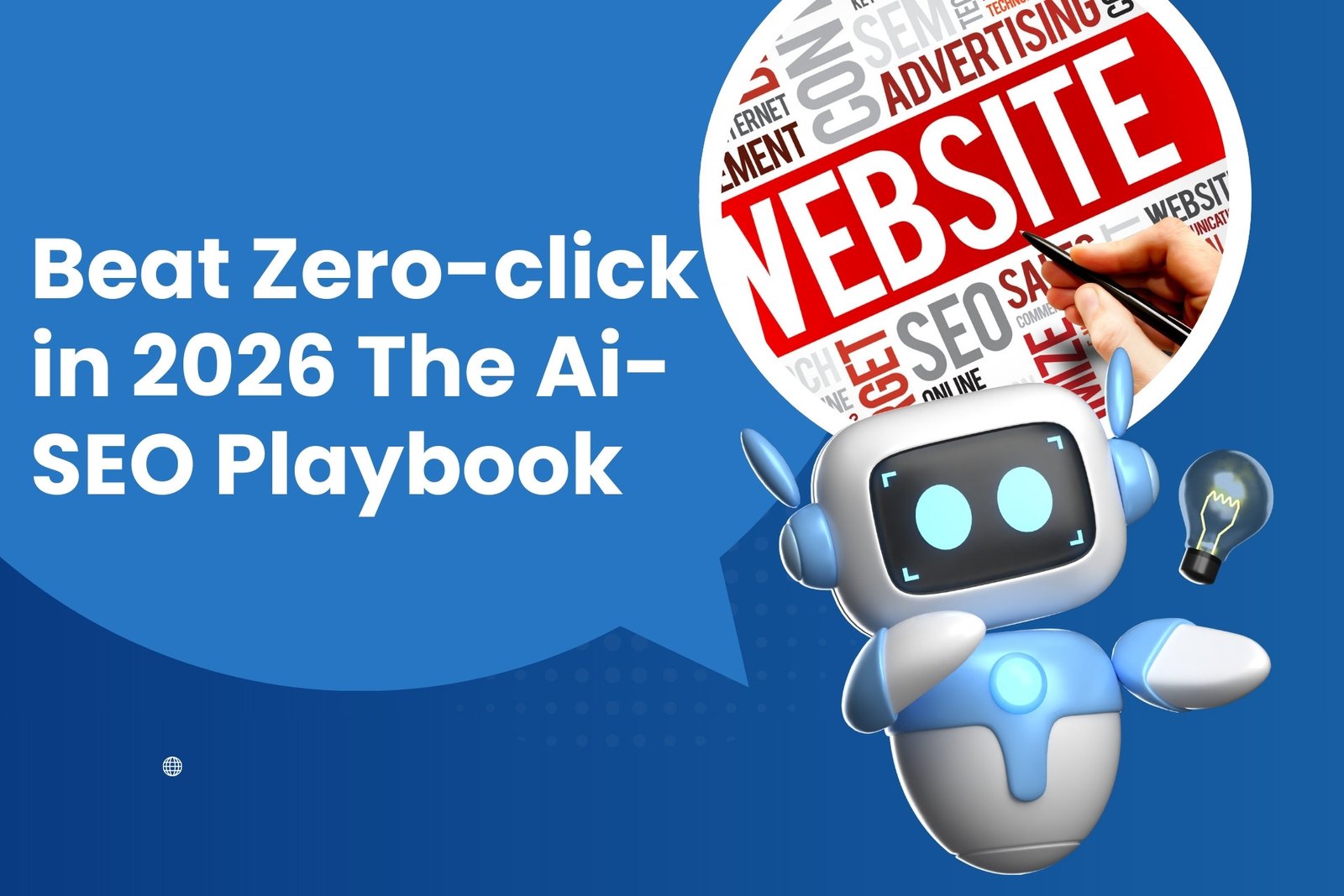
The 2026 AI-SEO Playbook: Prepare Now to Rank Before Everyone Else
TL;DR: Search in 2026 will be dominated by AI-first experiences, zero-click results, and generative summaries. To stay ahead, you must create content that’s both snippetable for AI and irresistibly clickable for humans. This guide shows you how to structure your content, use original data, add schema, and build CTAs that convert all geared toward next year’s search landscape.
Why 2026 Changes Everything
By 2026, Google and other search engines are expected to fully integrate AI-driven features like AI Mode, Web Guides, and SGE-style summaries. Many queries will now be answered directly on the results page. That means traditional SEO is evolving: impressions matter, but clicks are increasingly precious.
Key trend: Zero-click searches are on the rise — a growing number of queries never reach your site unless your content is structured to pull users in. Being source-worthy for AI and enticing for humans is now critical.
The 2026 SEO Rules You Can’t Ignore
- Snippetable & Clickable – AI needs short, exact answers, but humans need a reason to click.
- Original Signals – Publish your own data, experiments, and interactive assets. AI loves citing unique sources.
- Modular Structure – Use H2s that match user questions, short answers under each, and JSON-LD schema (Article + FAQ/HowTo)
- E-E-A-T & Transparency – Clear author credentials, methodology, and publication date are more important than ever.
Step 1 — Keyword Research for 2026
-
Break topics into micro-questions that match user intent. Example: “Which AI content tool is best for 2026?”
-
Identify “next-step” queries that encourage clicks (templates, tools, downloads).
-
Track queries where AI summaries may reduce clicks — prioritize creating high-value answers.
Template: Spreadsheet columns: Query | Intent | Search Volume | AI Exposure Risk | Proposed Asset | CTA
Step 2 — Future-Proof Content Structure
Each H2 should be self-contained for AI citation:
-
TL;DR (40–80 words)
-
Quick bullet playbook (3–5 bullets)
-
H2: What it is → 1–2 sentence snippet + longer actionable section
-
H2: How to implement it → Step-by-step instructions
-
H2: Case study or original data → Table or screenshot
-
H2: Common mistakes & checklist
Include a quoteable line at the top of each H2 to increase AI snippet chances.
Step 3 — Original Data & Interactive Assets
AI citations prioritize original sources. To become the source:
-
Publish micro-experiments or benchmarks.
-
Provide downloadable assets (PDFs, CSVs).
-
Include micro-tools (calculators, mini-audits) that AI cannot summarize directly.
Step 4 — On-Page Optimization & Schema
-
H2s in exact user question format
-
1–2 sentence answers under each H2
-
JSON-LD Article + FAQ/HowTo
-
Visible author box with credentials and methodology
-
Anchor short-answer snippets for internal linking
JSON-LD provided below.
Step 5 — CTR & Conversion Strategies in AI Era
Even if AI shows your answer in the SERP:
-
Use “next-step” CTAs in first 200 words
-
Tease unique data or insights the AI cannot fully display
-
Offer interactive content or downloads to force clicks
Example CTAs:
-
“Download the 30-Day AI-SEO Checklist for 2026 (PDF)”
-
“Run our free AI-Readiness audit — 3 quick checks”
-
“See original dataset & methodology (CSV)”
Step 6 — Links & Authority
-
Pitch original data to newsletters, podcasts, and tool vendors
-
Expert roundups: include 10–15 contributors and request backlinks
-
Build a resource page with datasets, tools, and guides that naturally attract citations
Step 7 — 2026 Metrics That Matter
-
Impressions → Clicks for AI-answered queries
-
CTR for target queries
-
Conversions from AI-driven sessions (downloads, signups)
-
Number of citations to original data

Next — How to work with Stevo Digital
- Get expert guidance. Let us analyze your site and identify the AI-SEO opportunities that will make the biggest impact in 2026.
- Optimize strategically. We’ll show you how to structure your content, add original insights, and implement schema that gets cited.
- Create a 90-day action plan. Turn insights into a clear roadmap that improves clicks, traffic, and measurable results.
At Stevo Digital, we help brands turn AI exposure into real traffic and revenue. Want us to review one page and send you three prioritized fixes? Reply or book a session — let’s make 2026 the year your site dominates AI-driven search.
Change in search can feel overwhelming, but small, strategic moves win. Focus on clarity (short answers), credibility (original data + author signals), and conversion (useful CTAs). If you take one step this week, let it be to publish one modular H2 with a short answer and a downloadable next-step. See you on the other side of the SERP.
Recommendations:
-
Google introduced AI Overviews (Search Generative Experience) and expanded it widely — this is now a major search surface. blog.google
-
Studies show a rising trend of zero-click searches — a majority in some reports — so CTR optimization matters more. sparktoro.com+1
-
Google is experimenting with AI-only search modes (AI Mode), which further emphasizes the need for being a cited source. Reuters
-
Google’s “people-first” guidance and E-E-A-T framework remain central for trust and ranking. Google for Developers
-
There’s public controversy and legal pushback around AI Overviews and content use, which underlines the value of original content and clear attribution. The Verge